
Breathing difficulties, coughing and wheezing are commonly associated with both asthma and chronic obstructive pulmonary disease (COPD). Although these conditions may feel similar, they affect the lungs differently and often require different treatment strategies.
Understanding the difference is important because the correct diagnosis can help control symptoms, protect lung function and reduce the risk of severe breathing emergencies.
What Is Asthma?
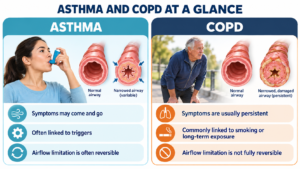
Asthma is a long-term inflammatory condition in which the airways become swollen, sensitive and temporarily narrow. This can make it difficult for air to move in and out of the lungs.
Asthma symptoms usually vary over time. A person may feel completely well on some days and develop coughing, wheezing or breathlessness after exposure to a trigger on others.
Common asthma triggers include:
- Dust, pollen, mould and animal dander
- Smoke and air pollution
- Respiratory infections
- Exercise
- Cold air or sudden weather changes
- Strong perfumes and chemical fumes
- Workplace dust or chemicals
- Emotional stress
Asthma is characterised by variable respiratory symptoms and variable expiratory airflow. In some people with long-standing asthma, however, airflow limitation may eventually become persistent.
What Is COPD?
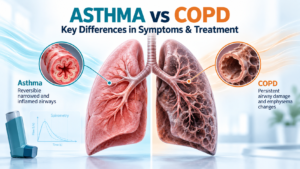
COPD is a long-term lung condition that causes persistent airflow limitation. It commonly includes chronic bronchitis, emphysema or a combination of both.
In chronic bronchitis, the airways remain inflamed and may produce excessive mucus. In emphysema, the delicate air sacs responsible for exchanging oxygen become damaged.
COPD generally develops gradually and is commonly associated with prolonged exposure to:
- Cigarette or tobacco smoke
- Second-hand smoke
- Biomass fuel smoke
- Indoor or outdoor air pollution
- Industrial dust, chemicals and fumes
- Certain occupational exposures
COPD is not curable, but appropriate treatment, smoking cessation, vaccination and pulmonary rehabilitation can reduce symptoms and improve quality of life. World Health Organization
Asthma vs COPD: Quick Comparison
| Feature | Asthma | COPD |
|---|---|---|
| Typical onset | Often begins in childhood or early adulthood, but can occur at any age | More commonly recognised in middle-aged or older adults |
| Symptom pattern | Symptoms may come and go | Symptoms are usually persistent and may gradually worsen |
| Common symptoms | Wheezing, chest tightness, cough and breathlessness | Progressive breathlessness, chronic cough, mucus and reduced exercise tolerance |
| Common causes | Airway inflammation combined with genetic and environmental factors | Usually long-term exposure to tobacco smoke, pollution, dust or fumes |
| Triggers | Allergens, infections, exercise, cold air or smoke | Infections, smoke, pollution, exertion or continued exposure |
| Airflow limitation | Often variable and reversible | Persistent and not fully reversible |
| Main treatment focus | Controlling inflammation and preventing attacks | Reducing symptoms, preventing flare-ups and maintaining activity |
| Smoking association | Smoking can worsen asthma but is not required for asthma to develop | Smoking is a major risk factor, but non-smokers can also develop COPD |
How Do the Symptoms Differ?
Both asthma and COPD may cause coughing, wheezing and shortness of breath. The pattern of these symptoms often provides important clues.
Symptoms more suggestive of asthma
Asthma may be more likely when:
- Symptoms vary from one day to another.
- Breathing problems are worse at night or early in the morning.
- Symptoms appear after exposure to dust, pollen, pets or cold air.
- Wheezing occurs after exercise.
- There are symptom-free periods.
- The person has allergies, eczema or a family history of asthma.
- Symptoms improve considerably after using prescribed inhaled treatment.
Symptoms more suggestive of COPD
COPD may be more likely when:
- Breathlessness gradually increases over several years.
- A cough is present on most days.
- Mucus or phlegm is regularly produced.
- Walking, climbing stairs or completing routine activities becomes difficult.
- There is a history of smoking or prolonged exposure to dust, fumes or biomass smoke.
- Chest infections occur frequently.
- Symptoms remain present despite temporary improvement with treatment.
However, symptoms alone cannot confirm either condition. Heart disease, infections, bronchiectasis, interstitial lung disease and other conditions can also cause similar breathing problems.
How Are Asthma and COPD Diagnosed?
A pulmonologist will usually review the patient’s symptoms, medical history, occupational exposure, allergy history and smoking history. A respiratory examination is then performed.
Spirometry
Spirometry is one of the most important tests for differentiating asthma from COPD. It measures how much air a person can exhale and how quickly it can be expelled.
The test may be repeated after administering a bronchodilator medicine.
- In asthma, airflow may improve significantly or show variability over time.
- In COPD, airflow obstruction remains persistent after bronchodilator testing.
Current GOLD guidance requires spirometry demonstrating persistent post-bronchodilator airflow obstruction to confirm COPD.
Depending on the patient’s symptoms, additional investigations may include:
- Peak-flow monitoring
- Chest X-ray or CT scan
- Blood eosinophil testing
- Allergy evaluation
- Oxygen saturation measurement
- Exercise assessment
- FeNO testing for airway inflammation
- Tests to rule out infections or heart-related conditions
How Does Asthma Treatment Differ?
The objective of asthma treatment is to control airway inflammation, prevent attacks and allow the patient to remain physically active without frequent symptoms.
Treatment may include:
Inhaled corticosteroid-containing treatment
Inhaled corticosteroids reduce airway inflammation and are a central part of long-term asthma management. Current asthma guidance recommends an inhaled corticosteroid-containing strategy rather than relying only on a short-acting reliever inhaler. GINA 2026
Bronchodilators
Bronchodilator medicines relax the muscles surrounding the airways. Depending on the treatment plan, they may be used for quick relief or combined with an inhaled corticosteroid for maintenance and symptom relief.
Trigger management
Identifying and reducing exposure to relevant triggers may help prevent symptoms. However, patients should not make major lifestyle or dietary restrictions without confirming that a trigger is genuinely affecting their asthma.
Biologic therapy
Some patients with severe allergic or eosinophilic asthma may benefit from biologic medicines after specialist assessment.
Inhaler-technique review
Even the correct medicine may not work effectively if the inhaler is used incorrectly. Technique, adherence and the need for a spacer should be reviewed regularly.
How Is COPD Treated?
COPD treatment focuses on relieving breathlessness, preventing exacerbations, maintaining physical ability and slowing further damage.
Treatment may include:
Smoking cessation
For patients who smoke, stopping tobacco use is one of the most important steps in preventing further decline in lung health.
Long-acting bronchodilators
Long-acting inhaled medicines help keep the airways open and reduce breathlessness. One or more types may be prescribed depending on symptoms and previous exacerbations.
Inhaled corticosteroids for selected patients
Inhaled corticosteroids are not automatically required for every person with COPD. They may be added for selected patients, particularly those with frequent exacerbations, certain inflammatory patterns or coexisting asthma features.
Pulmonary rehabilitation
Pulmonary rehabilitation combines supervised exercise, breathing strategies and education. It can improve exercise capacity, confidence and quality of life.
Vaccination and infection prevention
Recommended vaccinations can help reduce respiratory infections that may trigger COPD exacerbations.
Oxygen therapy
Long-term oxygen is prescribed only for patients who meet specific criteria for persistently low blood oxygen levels. Breathlessness alone does not necessarily mean that oxygen therapy is needed.
Can Someone Have Features of Both?
Yes. Some patients have persistent airflow limitation along with clear features of asthma, such as variable symptoms, allergies or a strong response to corticosteroid treatment.
This does not mean that every patient with wheezing has both conditions. A pulmonologist must examine the complete clinical history and lung-function results before selecting treatment.
Where asthma is present or strongly suspected, corticosteroid-containing treatment is particularly important and should not be stopped without medical advice.
Why the Correct Diagnosis Matters
Using the wrong treatment may leave airway inflammation uncontrolled, fail to prevent COPD exacerbations or expose the patient to medicines that may not be necessary.
An accurate diagnosis helps the doctor:
- Select the appropriate inhalers
- Teach the correct inhaler technique
- Identify avoidable triggers and exposures
- Plan vaccinations and rehabilitation
- Monitor lung function
- Reduce emergency visits and hospital admissions
- Detect other lung or heart conditions
When Should You Consult a Pulmonologist?
Arrange a respiratory evaluation if you experience:
- Recurrent wheezing
- A cough lasting several weeks
- Breathlessness during routine activities
- Night-time coughing or breathing difficulty
- Frequent chest infections
- Regular mucus production
- Increasing dependence on a reliever inhaler
- Breathing symptoms associated with smoking or workplace exposure
Seek urgent medical assistance if breathlessness becomes severe, the person cannot speak comfortably, the lips or fingertips appear bluish, confusion develops, chest pain occurs or the prescribed rescue treatment does not provide adequate relief.
Frequently Asked Questions
Is COPD the same as severe asthma?
No. They are different conditions. Asthma usually causes variable airway narrowing, while COPD causes persistent airflow obstruction related to airway or lung-tissue damage. Long-standing asthma can sometimes cause persistent limitation, so testing is essential.
Can a non-smoker develop COPD?
Yes. Long-term exposure to biomass smoke, air pollution, occupational dust, chemical fumes and certain genetic conditions can contribute to COPD.
Can asthma develop in adulthood?
Yes. Adult-onset asthma can occur even in people who had no breathing problems during childhood.
Can asthma turn into COPD?
Asthma does not automatically become COPD. However, poorly controlled long-term asthma, smoking and repeated harmful exposures may contribute to persistent airflow limitation in some patients.
Which condition is more dangerous?
Both can become serious when poorly controlled. Asthma can cause sudden, severe attacks, while COPD may progressively reduce lung function and cause repeated exacerbations. Early diagnosis and regular treatment are important in both.
Can patients with asthma or COPD exercise?
In most cases, yes. Exercise is beneficial when the condition is appropriately controlled. The type and intensity of activity should be personalised, especially for patients with severe COPD or exercise-triggered asthma.
Will I need an inhaler for life?
That depends on the diagnosis, severity and response to treatment. Patients should never stop or change an inhaler without consulting their doctor, even if they currently feel well.
Final Message
Asthma and COPD can produce similar symptoms, but they are not interchangeable diagnoses. Asthma symptoms are typically variable and linked to triggers, whereas COPD symptoms are more persistent and may gradually interfere with everyday activities.
If you experience repeated coughing, wheezing or breathlessness, do not assume that it is simply due to ageing, poor fitness or seasonal weather. A respiratory evaluation and spirometry can help identify the cause and guide the right treatment.
About the Author
Dr. Subhakar Nadella
M.D. (Pulmonary Medicine)
Consultant Clinical & Interventional Pulmonologist
Dr. Subhakar Nadella has more than 10 years of experience in Pulmonary Medicine. He manages patients with asthma, COPD, pneumonia, sleep disorders, allergy and immunology conditions, tuberculosis, occupational lung diseases, connective-tissue-related lung conditions, pleural diseases and complex critical respiratory illnesses.
Medical disclaimer: This article is intended for general education and does not replace an individual consultation, diagnosis or treatment plan.